


Safety-Controlled Industrial Reactor
A safety-controlled industrial reactor is a highly engineered vessel designed for chemical, thermal, or catalytic processing under carefully regulated conditions. It is widely used in industries such as pharmaceuticals, specialty chemicals, materials production, and energy processing, where precise control of temperature, pressure, mixing, and reaction time is essential. The main purpose of such a reactor is to ensure efficient production while maintaining a strong focus on operational safety, product consistency, and environmental protection.The reactor is typically constructed from corrosion-resistant materials such as stainless steel, alloy metals, or lined composites, depending on the chemicals being processed. Its internal design may include agitation systems, heating or cooling jackets, pressure relief devices, sensors, and automated control units. These components work together to maintain stable reaction conditions and prevent hazardous situations such as overheating, overpressure, runaway reactions, or leakage of toxic substances.Safety control is a defining feature of this type of reactor. Modern systems often integrate multiple layers of protection, including real-time monitoring of temperature, pressure, flow rate, and liquid level. If any parameter moves outside the safe operating range, the control system can trigger alarms, reduce input, activate cooling, or shut down the process automatically. Emergency venting and containment systems may also be installed to manage unexpected increases in pressure or chemical release.In addition to mechanical safeguards, advanced control logic plays an important role. Programmable automation systems can coordinate different stages of the process, ensuring that raw materials are added in the correct sequence and that reaction conditions remain within approved limits. Data logging and process tracking further improve safety by allowing operators to review trends, detect abnormalities early, and optimize future operations.A safety-controlled industrial reactor also supports product quality. By maintaining consistent conditions, it helps achieve uniform reaction rates and predictable output characteristics. This is especially important in sensitive applications where small variations can affect purity, yield, or performance. At the same time, efficient energy management and heat transfer design can reduce waste and improve overall process efficiency.Operator safety is another major advantage. The reactor is usually equipped with insulated surfaces, locked access points, and remote monitoring interfaces to minimize direct exposure to hazards. Maintenance procedures are designed to isolate the system, release pressure safely, and verify that the reactor is in a secure state before inspection or repair.Overall, a safety-controlled industrial reactor represents the integration of engineering precision, automated supervision, and hazard prevention. It enables modern industries to carry out complex reactions reliably while protecting workers, equipment, and the surrounding environment.
สินค้า
การจัดหมวดหมู่:
-
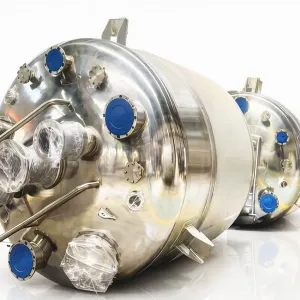
Industrial Stainless Steel Reactor with Safety Controls & Ergonomic Portable Stainless Kettle (Optional Whistle)
การจัดหมวดหมู่: Liquefaction Cooking Tankเข้าชม: 227จำนวน:เวลาเผยแพร่: 2026-06-06 15:49:40The Industrial Stainless Steel Reactor offers robust construction with advanced safety controls, ensuring reliable chemical processing and heating. Its ergonomic portable stainless kettle allows easy handling, with an optional whistle for added safety. Ideal for laboratories, factories, or industrial kitchens, it delivers efficiency, durability, and user-friendly operation in one versatile system.
ข่าว
การจัดหมวดหมู่:
-
[Blog]Fruit wine fermentation tank Latest Wholesale Manufacturers...
2026-07-31 03:36:42
กรณี
การจัดหมวดหมู่:
ไม่มีผลการค้นหา!
วีดีโอ
การจัดหมวดหมู่:
ไม่มีผลการค้นหา!
ดาวน์โหลด
การจัดหมวดหมู่:
ไม่มีผลการค้นหา!
รับสมัครงาน
การจัดหมวดหมู่:
ไม่มีผลการค้นหา!
ผลิตภัณฑ์ที่แนะนำ
ไม่มีผลการค้นหา!



 โทรศัพท์