Automatic Stainless steel CIP Cleaning System Equipment
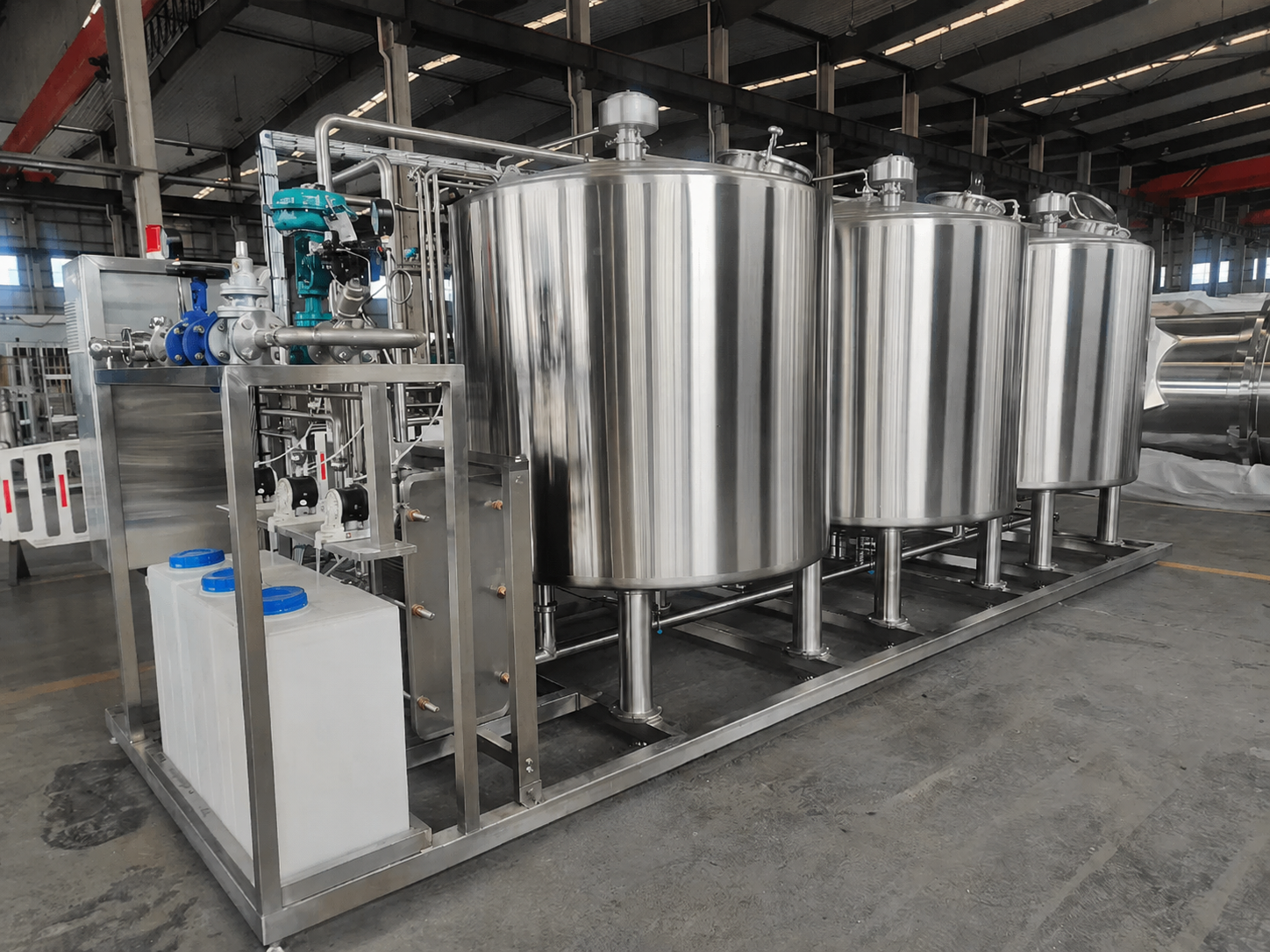
Our CIP cleaning system is hygienic stainless steel equipment designed for in-place cleaning without disassembly. It automatically completes pre-rinsing, alkali washing, acid washing, final rinsing and cleaning solution recovery through PLC programmed control. It effectively removes product residues, grease and contaminants inside tanks, pipelines and sterilizers. It meets GMP sanitary requirements, reduces manual labor and secondary contamination risks. With a small footprint, it can be matched with sterilizers, fermenters and filling lines. Widely used in food, dairy, beverage and pharmaceutical industries.
PRODUCT DESCRIPTION
Description
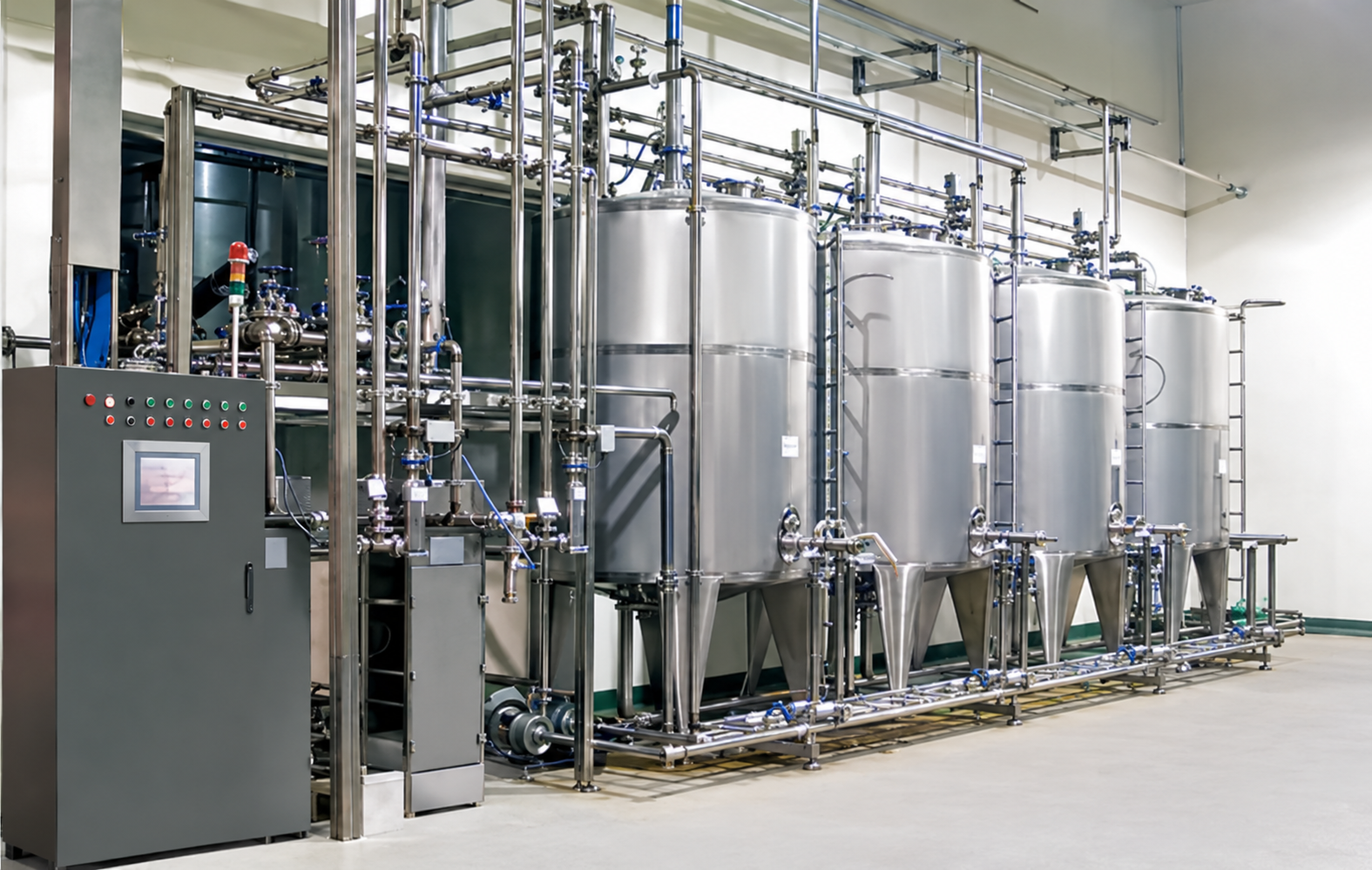
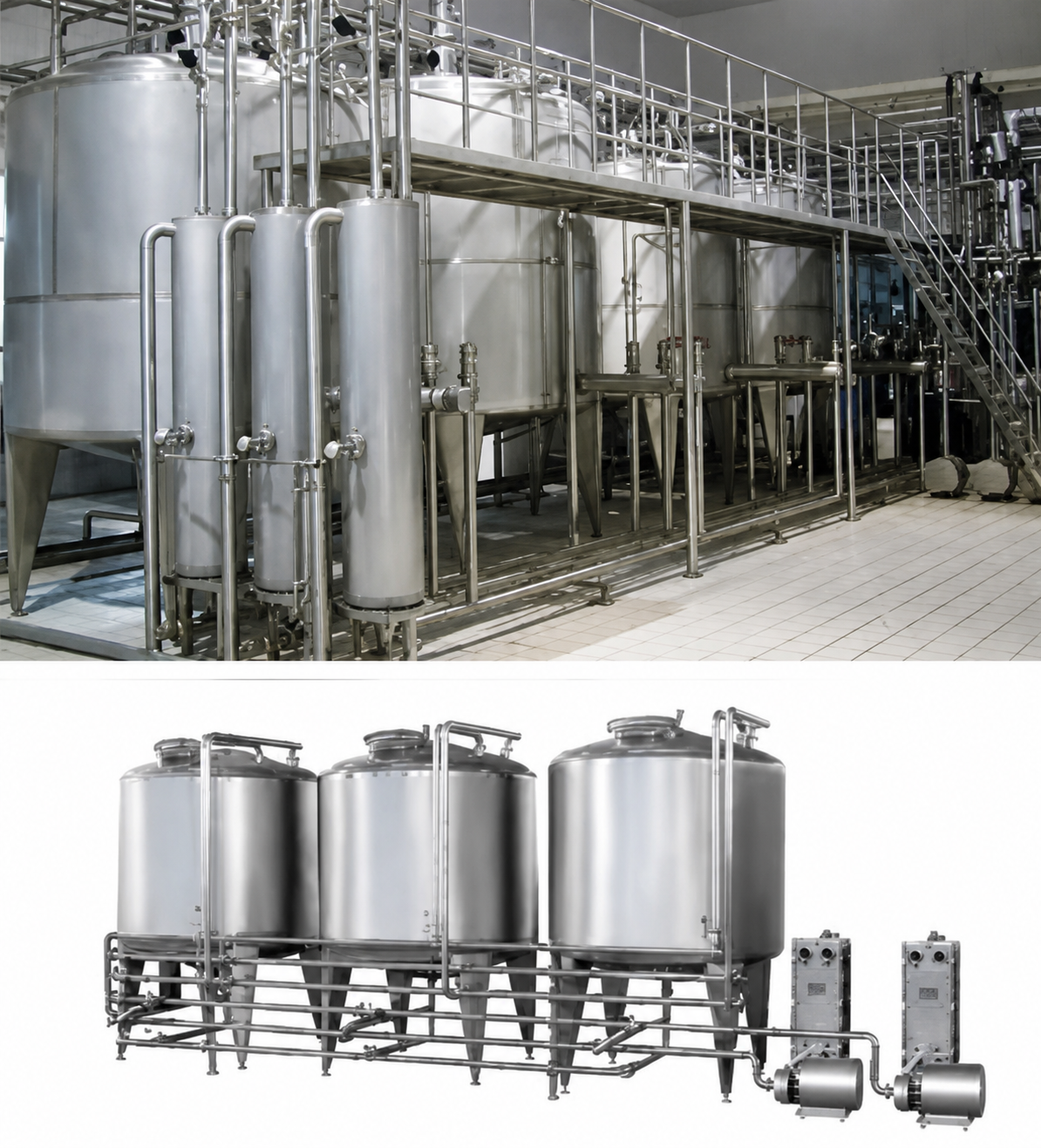
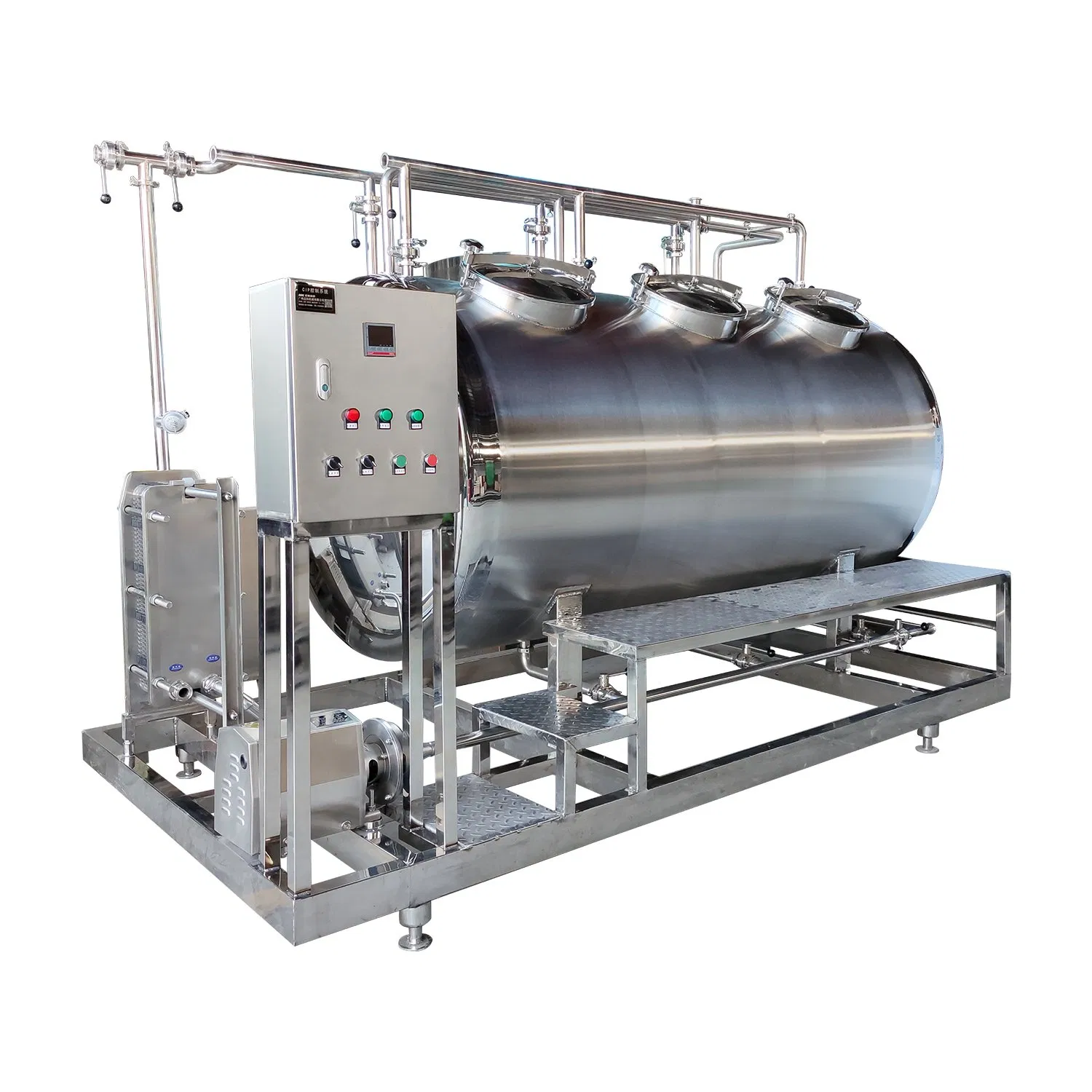
Stainless steel CIP cleaning station is a modularised skid-mounted plug-in unit for automated cleaning-in-place of brewery process installations, mainly composed of single or multiple cleaning fluid Storage Tank and pipe, distributor, booster pump, circumfluence pump, pneumatic control valve acid-base metering pump, plate heat exchanger, temperature control instrument, electrical conductivity detector, liquid level controller, PLC, touch screen, control cabinet and system pipe valve parts, etc.
The cleaning regime is fully adjustable to that required by the target system in terms of cleaning time, temperature, pressure and flow.
The fully automatic CIP cleaning system is suitable for in-situ cleaning of material pipeline equipment in dairy plants, breweries, beverages and general food plants. Main material: SUS304 and or 316L. This equipment is composed of alkali tank, acid tank, hot water tank, various pipelines and pneumatic valves, pressure transmitter, conductivity meter, platinum thermal resistance and control system, etc. It uses centrifugal pump The conveying cleaning fluid is forced to circulate in the material pipeline and equipment to achieve the cleaning purpose. Therefore, there is no need to dismantle the pipeline equipment, which can increase the utilization rate of the equipment and reduce the labor intensity of workers. The specific use of this equipment must be combined with the equipment and piping layout of the worker's workshop and cleaning heads
Feature
• In-place cleaning, easy to operate, safe, low labor intensity, high work efficiency.
• Clean thoroughly, achieving disinfection sterilization, and guaranteeing the sanitary requirements, is helpful to improve product quality.
• Pipelining type cleaning to reduce the occupying room.
• Detergent can be recycled, high utilization ratio saving steam and water.
• Less wearing parts, equipment, long service lifeSuitable for large, medium and small equipment cleaning.
• Cleaning can be programmed and automated.
Application
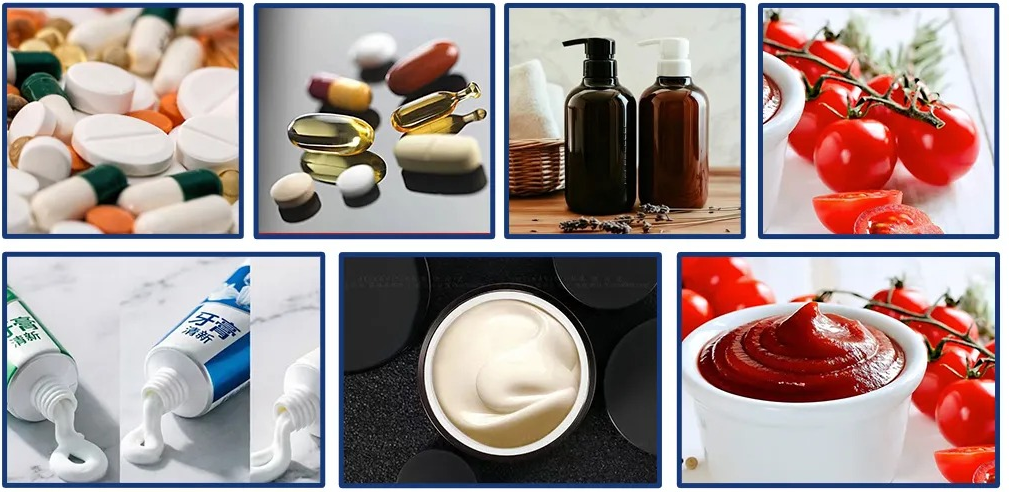
• Widely used in the beverage, dairy, juice, beer, sugar, biological pharmaceutical automatic production process.
• The small portable CIP online cleaning system mainly used in biological fermentation, the pharmaceutical industry.
Design Parameter
Procedure | Time | Temperature |
Water prewash | 3min-5min | 40ºC-50ºC |
Alkali wash | 5min-15min | 60ºC-80ºC |
Intermediate washing | 3min-5min | 40ºC-50ºC |
Acid pickling | 5min-10min | 60ºC-80ºC |
Finally water washed | 3min-5min | 40ºC-50ºC |
Normal Model And Main Technical Parameters
Model | ALT-CIP-0.5 | ALT-CIP-1 | ALT-CIP-2 | ALT-CIP-3 | ALT-CIP-4 |
Acid tank volume (L) | 500 | 1000 | 2000 | 3000 | 4000 |
Alkali tank volume (L) | 500 | 1000 | 2000 | 3000 | 4000 |
Hot water tank volume (L) | 500 | 1000 | 2000 | 3000 | 4000 |
Heating method | Coil, plate, tube heating, electric heat pipe heating |
CIP Pump | Follow Rate(m³/h) | 10 | 10 | 20 | 20 | 30 |
Pump Head(m) | 24 | 24 | 36 | 36 | 36 |
Power(kw) | 2.2 | 2.2 | 4.0 | 4.0 | 5.5 |
Related Products
FAQ
Q: What about payment terms, payment security and lead time?
A: We accept 40% deposit, with the balance to be paid before shipment. Irrevocable Letter of Credit at sight is also acceptable. Lead time ranges from 7 to 30 days, subject to order quantity.
Q: How do we confirm product specifications?
A: Our professional engineers will handle all design and adjustments according to your requirements. OEM and ODM services are available.
Q: What services can you offer?
A: Accepted delivery terms: FOB, CFR, CIF, EXW, DDP, DDU, Express; Accepted payment currencies: USD, EUR, CNY; Accepted payment methods: T/T, L/C, Credit Card, Western Union, Alipay.
Q: How can we confirm your machines work properly?
A: We will test machine performance before delivery.
Q: What is your minimum order quantity?
A: 1 set.
Advanced CIP Cleaning System for Dairy and Beverage Applications
1. Basic introduction:
- Definition: The CIP (Cleaning in Place) cleaning system is a system that cleans the product - contact surfaces inside production equipment, pipelines, containers, etc. without disassembling the equipment.
- Application fields: It is widely used in food, drug, and cosmetic manufacturing enterprises with a high degree of mechanization, such as those producing beverages, dairy products, fruit juices, fruit pulps, jams, alcoholic beverages, pharmaceuticals, and cosmetics.
2. Equipment composition:
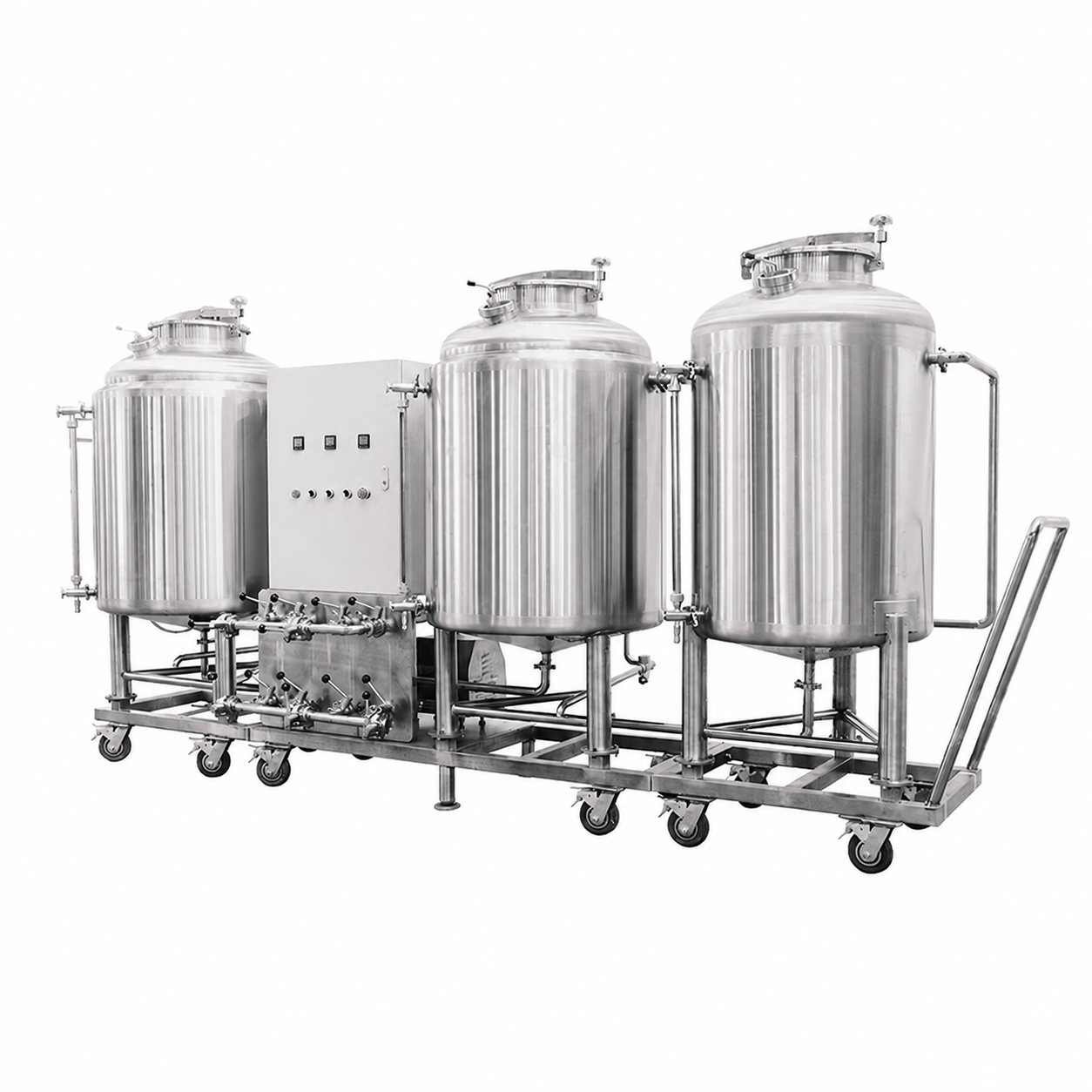
- Cleaning tanks: There are usually acid tanks, alkali tanks, water tanks, etc., and some are also equipped with recovery tanks, neutralization tanks, etc. These tanks are used to store different cleaning solutions, and generally are insulated tanks. The acid and alkali tanks are also equipped with a stirring system to ensure the uniformity of the cleaning solution.
- Pumps: Including centrifugal pumps for transporting cleaning solutions, return pumps for providing power, etc. The materials of the pump body and impeller are usually high - quality Stainless steel, meeting the requirements of sanitary pumps.
- Heating system: Used to heat the cleaning solution to improve the cleaning effect. Common heating methods include jacket heating, etc.
- Valve instruments: Such as various control valves, liquid level meters, online acid - base concentration detectors, etc., which are used to control the flow, pressure, concentration and other parameters of the cleaning solution.
- Pipeline accessories: Pipes, joints, etc. that connect various equipment components.
3. Cleaning process:
- Common process: The general process adopts a three - step cleaning method, that is, water rinsing - alkali washing - final rinse; the aseptic dispensing process adopts a five - step cleaning method, that is, water rinsing - alkali washing - water rinsing - acid washing - final rinse.
- Specific operation: Drinking water or the final rinse water recovered is often used for water rinsing. The water temperature can be adjusted according to different residues and is generally controlled at 60 - 80 °C; 1.0 - 2.5% NaOH solution is often used for alkali washing. Under the premise of no cross - contamination, the alkali - washed recovery liquid can be recycled; 1.0 - 2.0% nitric acid is often used for acid washing; purified water is used for the final rinse, and injection water is used for aseptic dispensing.
4. Working principle:
It mainly uses chemical energy, thermal energy, mechanical energy and the dissolving effect of water to remove dirt on the surface of the equipment. Chemical energy is generated by added chemical reagents. Acid and alkali detergents can remove different types of residues through chemical reactions; thermal energy can change the physical state of the dirt, accelerate the chemical reaction speed and improve the cleaning effect; mechanical energy is provided by the pressure and friction generated by the flow of the cleaning solution; as a polar compound, water has a certain dissolving effect on some substances, which is helpful for cleaning.
5. Characteristics:
- Good cleaning effect: It can comprehensively and thoroughly clean the equipment, remove various dirt, deposits, microorganisms and other pollutants, and ensure the safety and quality of products.
- High efficiency and energy saving: The automated cleaning process reduces manual operation, improves cleaning efficiency, saves energy such as water and steam at the same time, and reduces the amount of detergent used.
- Safe operation: It avoids the process of manual disassembly and reassembly of equipment, reducing the labor intensity and safety risks of operators.
- Production equipment can be large - scale and automated: The CIP cleaning system can be used in conjunction with large - scale production equipment to realize automated control of the production process and improve production efficiency and product quality.
- High flexibility: The system can carry out acid washing, alkali washing, hot water rinsing and other processes alone according to different cleaning requirements, and can also formulate specific cleaning programs for complete automatic cleaning.
6. Attributes:
- Hygienic attribute: As a cleaning system for food, drug and other industries, it must meet the requirements of the sanitary grade. The equipment materials, cleaning agents, etc. must meet the relevant sanitary standards to ensure that the cleaned equipment will not cause pollution to the products.
- Technical attribute: It involves multiple technologies such as machinery, chemical engineering, and automatic control, and requires a relatively high technical level and professional knowledge to design, install and maintain.
- Economic attribute: Although the initial investment of the CIP cleaning system is relatively high, it can improve production efficiency, reduce equipment maintenance
Our service
1. Provide equipment inspection certificate and manual to ensure that users can install and use it correctly.
2. After the equipment arrives at the destination, the company will send engineers to guide the installation, commissioning and customer training until satisfied.
3. During the warranty period, customers will be free to wear accessories, and after the warranty period expires for one year, our company will provide accessories at cost price.
4. We provide lifelong maintenance service, including sending engineers to customers when necessary.
 +86 29-87031531



 โทรศัพท์