Stainless steel fermenter vs Plastic Fermenter: What Breweries Prefer
Choosing the right Fermentation vessel is one of the most critical decisions for any brewery. The fermentation vessel not only affects the taste and consistency of beer but also influences operational efficiency, sanitation, and long-term sustainability. Among the most common options are Stainless steel fermenters and plastic fermenters. Breweries carefully weigh the pros and cons of each type to determine what best suits their production needs.
This guide explores the differences, advantages, and limitations of stainless steel and plastic fermenters, helping breweries make informed decisions and produce high-quality beer consistently.
1. Introduction to Fermentation Vessels
Fermentation is the heart of beer production. Yeast converts wort sugars into alcohol and carbon dioxide, creating beer. The vessel where fermentation occurs is crucial to ensuring proper yeast performance, maintaining hygiene, and controlling environmental factors like temperature and pressure.
A fermentation vessel must provide:
Consistent fermentation conditions
Hygienic, contamination-free environments
Efficient yeast management
Optimal operational workflow
Breweries often choose between stainless steel fermenters and plastic fermenters, depending on scale, budget, beer style, and production goals.
2. Overview of Stainless Steel Fermenters
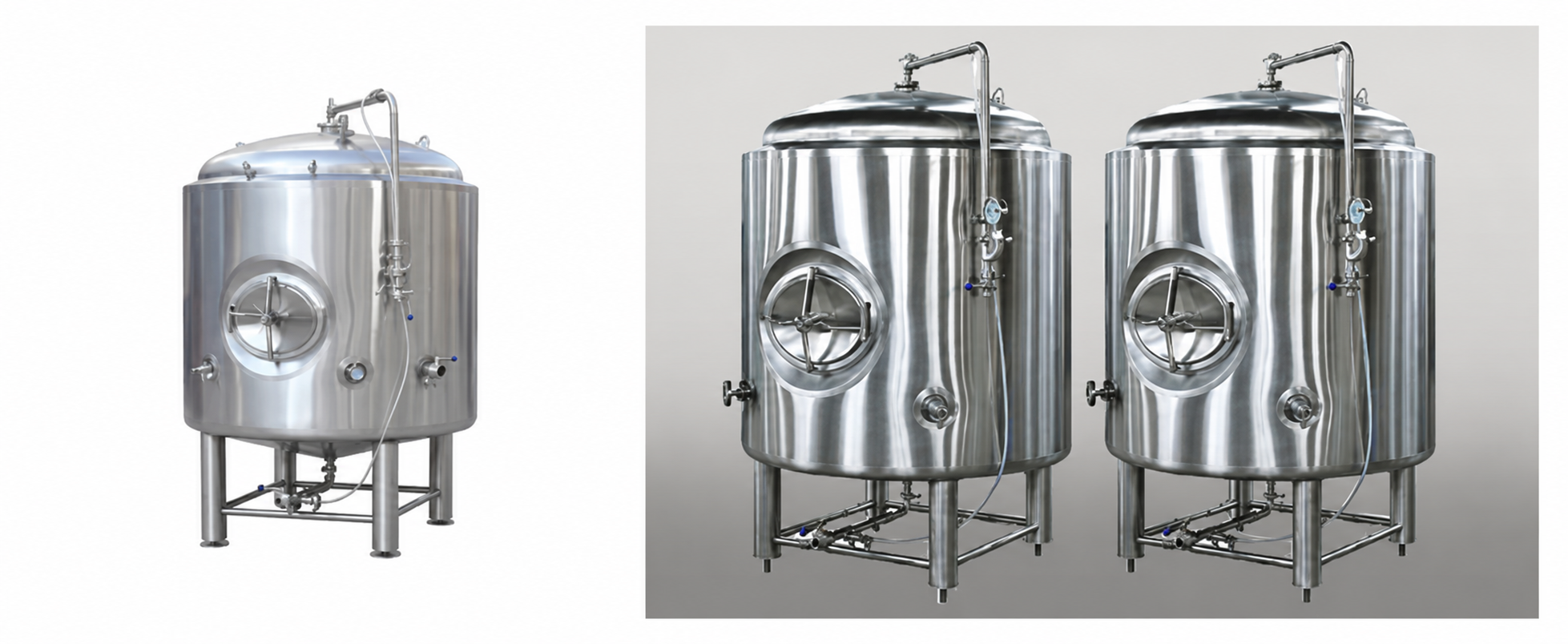
Stainless steel fermenters are widely used in modern breweries for both small and large-scale operations. Their popularity is due to durability, ease of cleaning, and precise control over fermentation conditions.
Key Features:
Durable Construction: Stainless steel resists corrosion and maintains integrity over many years of use.
Hygienic Surface: Non-porous surfaces prevent bacterial growth and off-flavors.
Temperature Control: Jacketed tanks and cooling systems allow precise temperature management.
Pressure Resistance: Suitable for pressurized fermentation and carbonation.
Stainless steel fermenters are ideal for breweries that prioritize consistent beer quality and long-term operational efficiency.
3. Overview of Plastic Fermenters
Plastic fermenters are often made from food-grade polyethylene or polypropylene. They are lightweight, cost-effective, and commonly used for homebrewing, pilot batches, or small craft breweries.
Key Features:
Low Cost: Plastic fermenters are cheaper to purchase and replace.
Lightweight: Easy to move and handle.
Versatile Sizes: Suitable for small-scale production or experimental batches.
However, plastic fermenters have limitations, including potential scratches that can harbor bacteria, limited temperature control, and shorter lifespan compared to stainless steel.
4. Durability and Longevity
Stainless Steel Fermenters:
Highly resistant to corrosion and mechanical damage
Can last decades with proper maintenance
Retains structural integrity under pressurized conditions
Plastic Fermenters:
Prone to scratches and UV damage
Limited lifespan, often requiring replacement every few years
Less resistant to high pressure or extreme temperature changes
Breweries that prioritize long-term investment and durability generally prefer stainless steel fermenters.
5. Hygiene and Sanitation
Sanitation is crucial for preventing contamination and off-flavors in beer.
Stainless Steel Fermenters:
Smooth, non-porous surfaces are easy to clean
Compatible with CIP (cleaning-in-place) systems
Minimal risk of microbial growth
Plastic Fermenters:
Scratches can harbor bacteria, requiring careful monitoring
More labor-intensive cleaning
Risk of odor absorption from previous batches
Hygiene considerations often lead breweries to choose stainless steel fermenters for reliable, contamination-free production.
6. Fermentation Control
Temperature and pressure control are critical for fermentation quality.
Stainless Steel Fermenters:
Offer precise temperature regulation via cooling jackets or internal coils
Can handle pressurized fermentation for lagers and carbonated beers
Improve consistency in yeast performance and beer flavor
Plastic Fermenters:
Limited or no temperature control
Unsuitable for pressurized fermentation
Less consistent fermentation results
Breweries aiming for high-quality, repeatable beer production prefer stainless steel fermenters for superior process control.
7. Cost Considerations
Initial Investment:
Long-Term Value:
Stainless steel offers better longevity, hygiene, and consistency, reducing replacement and maintenance costs over time.
Plastic may save money initially but can incur additional costs due to replacements, sanitation challenges, and potential batch failures.
The total cost of ownership often favors stainless steel for professional breweries.
8. Operational Efficiency
Stainless Steel Fermenters:
Allow integration with automated systems for temperature and fermentation monitoring
Facilitate efficient yeast Harvesting and sediment management
Support scalable production from small batches to large-scale brewing
Plastic Fermenters:
Require more manual intervention
Limited integration with automated brewery systems
Less scalable for growing operations
Operational efficiency is a key reason why many breweries prefer stainless steel fermenters.
9. Beer Quality and Consistency
The choice of fermenter directly affects beer quality.
Stainless Steel Fermenters:
Consistent temperature and sanitation
Controlled yeast activity
Reliable flavor, aroma, and carbonation
Plastic Fermenters:
More variability in fermentation results
Higher risk of off-flavors or contamination
Best suited for experimental or homebrew batches
Breweries focused on delivering premium, consistent beer favor stainless steel fermenters.
10. Sustainability and Environmental Impact
Stainless Steel Fermenters:
Long-lasting, reducing waste from frequent replacements
Can be recycled at the end of their lifecycle
Supports sustainable brewery operations
Plastic Fermenters:
Sustainable practices encourage breweries to invest in stainless steel fermenters for long-term environmental and operational benefits.
11. When Plastic Fermenters Make Sense
Plastic fermenters still have practical applications:
Homebrewing and pilot batches
Experimental or seasonal beers
Breweries with limited budgets for initial equipment
Plastic fermenters are lightweight, portable, and easy to use but are generally less suitable for large-scale, high-quality, and long-term production.
12. Summary of Comparison
| Feature | Stainless Steel Fermenter | Plastic Fermenter |
|---|
| Durability | Very high | Moderate |
| Lifespan | Decades | Few years |
| Sanitation | Easy, non-porous | Scratches can harbor bacteria |
| Temperature Control | Precise | Limited |
| Pressure Handling | Yes | Limited |
| Initial Cost | High | Low |
| Operational Efficiency | High | Moderate |
| Beer Quality & Consistency | Excellent | Variable |
| Sustainability | Recyclable, long-lasting | Short lifespan, waste |
This comparison demonstrates why most professional breweries prefer stainless steel fermenters for consistent, high-quality Craft beer production.
13. Conclusion
Breweries choosing between stainless steel and plastic fermenters must weigh durability, hygiene, fermentation control, operational efficiency, and beer quality. While plastic fermenters serve niche applications and small-scale operations, stainless steel fermenters offer long-term value, reliability, and superior control over the brewing process.
In modern brewing, the majority of breweries prefer stainless steel fermenters for their ability to ensure consistent, professional-quality beer, optimize operational efficiency, and support sustainable production practices. Selecting the right fermenter is a critical investment that influences both beer quality and brewery success.
 +86 29-87031531



 โทรศัพท์
ความคิดเห็น
(0)